
Description
Product Description
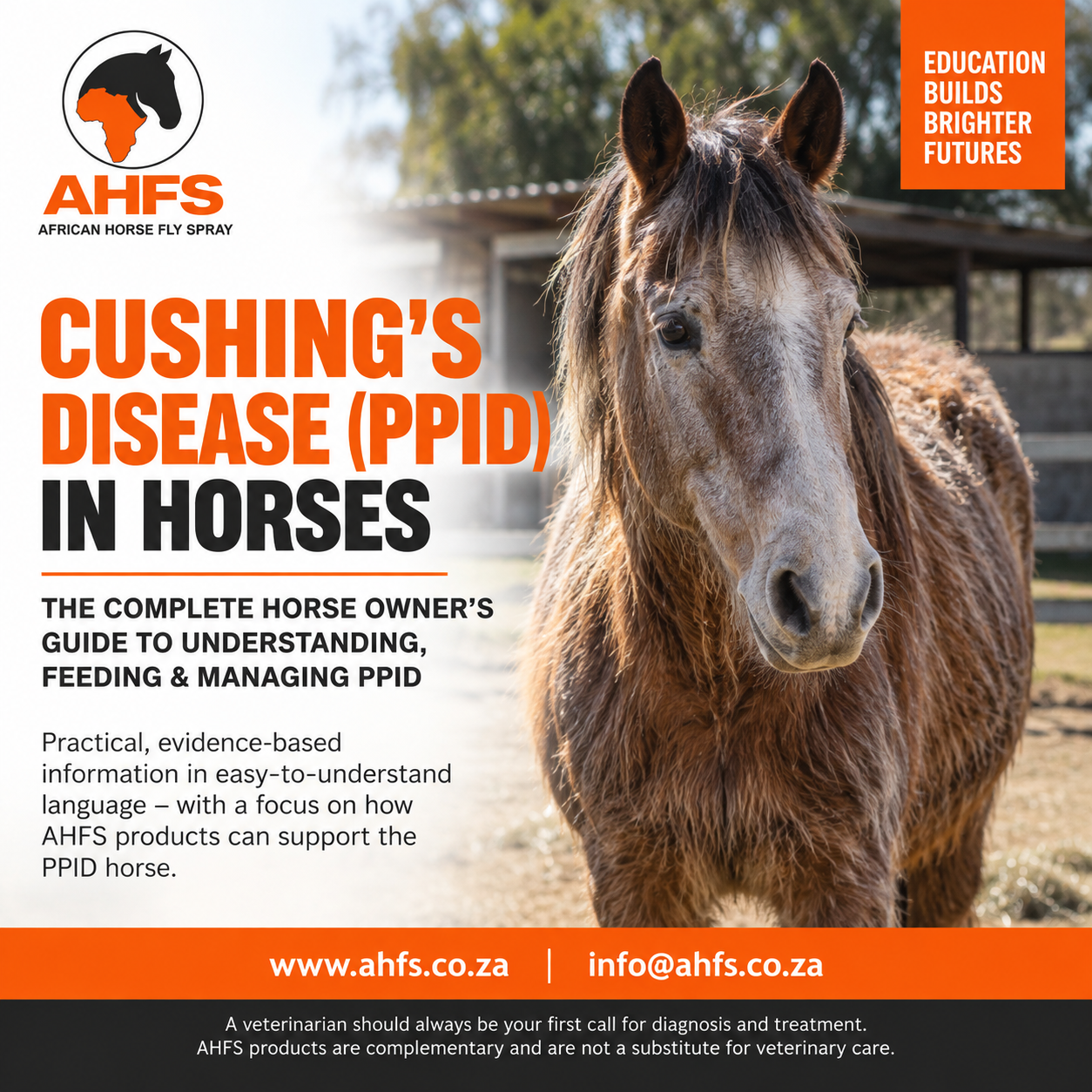
Cushing’s Disease (PPID) In Horses — The Complete Horse Owner’s Guide To Understanding, Feeding & Managing PPID
Cushing’s Disease, more correctly known as Pituitary Pars Intermedia Dysfunction (PPID), can be confusing for horse owners. What are the early signs? Why does the coat change? Why do some horses lose muscle? What is the connection between PPID, insulin dysregulation and laminitis? And perhaps most importantly — what can we actually do to support these horses?
We created this comprehensive AHFS Educational eBook to answer those questions in straightforward, easy-to-understand horse-owner language.
Across approximately 48 pages, we take you from understanding what happens inside the brain and pituitary gland right through to the practical everyday management of a horse living with PPID.
What We Cover
• What PPID/Cushing’s Disease actually is
• What happens inside the brain and pituitary gland
• Causes and risk factors
• Early and advanced signs to watch for
• The characteristic PPID coat and abnormal shedding
• Muscle and topline loss
• ACTH testing and seasonal changes
• TRH stimulation testing
• Pergolide and how it works
• PPID versus Equine Metabolic Syndrome
• PPID and insulin dysregulation
• Why insulin matters when we talk about laminitis
• Endocrinopathic laminitis
• Feeding the overweight versus underweight PPID horse
• Roughage, sugar, starch and NSC
• Hay analysis and soaking
• Protein and essential amino acids
• Muscle and topline nutritional support
• Fats, flaxseed and omega-3
• Digestive and hindgut support
• Treats for metabolically sensitive horses
• Chaste Tree Berry (Vitex) and what the science actually says
• Individual herbs and spices
• Hoof, dental and general senior-horse management
• Practical monitoring for owners
• Long-term quality of life
Where Can AHFS Help?
We also explain where selected AHFS nutritional products may fit into the management programme of the individual horse, including:
AHFS Metabolic Balance Mix
Nutritional support for horses requiring careful metabolic management.
AHFS Laminitis Mix
Nutritional hoof and metabolic support to complement appropriate veterinary and farrier management.
AHFS Metabobites
A molasses-free, no-added-sugar treat option designed with metabolically sensitive horses in mind.
AHFS Trace Mineral Mix
Targeted mineral support where the overall diet requires additional mineral supplementation.
AHFS Condition & Topline Support Mix
Nutritional support for horses struggling to maintain condition and topline.
AHFS Muscle & Performance Support
Targeted nutritional support for normal muscle condition and performance.
We also discuss Full Spectrum Pea Powder, Pea Protein Isolate 80%, Lysine, Stabilised Flaxseed, Gut Mix 5, Yea-Sacc, Bio-Mos and Pro-Sacc, as well as individual herbs and spices including Chaste Tree Berry, Spirulina, Milk Thistle, Nettle Leaf, Dandelion, Rosehips, Ginger, Cinnamon, Turmeric, Black Pepper and Fenugreek.
Importantly, we don’t simply tell you that an ingredient is “good for Cushing’s”. We explain what it may realistically contribute, where the scientific evidence is limited, and what it should never be expected to replace.
Backed By Scientific Literature
A comprehensive scientific bibliography is included at the end of the eBook, covering PPID, ACTH and TRH testing, pergolide, insulin dysregulation, laminitis, nutrition, roughage and NSC, protein and amino acids, digestive support and Chaste Tree Berry.
Our aim is simple:
Understand the condition.
Support the horse.
Protect the feet.
Preserve quality of life.
This eBook is educational and does not replace veterinary diagnosis, prescribed medication, emergency laminitis treatment, professional farrier care or individual veterinary nutritional advice.
Reviews
There are no reviews yet.